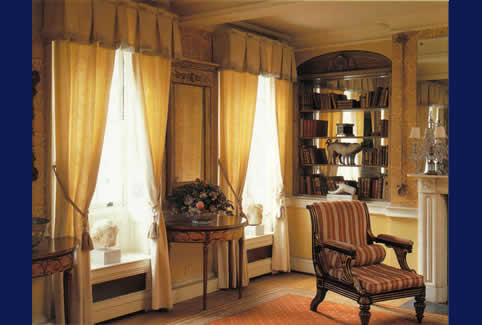
Custom
Valances
|
Valances
have been used throughout history to add style and sophistication
to any décor. Often called the signature on the
painting, they can be decorative and extremely functional
when used in conjunction with blind and drapery treatments.
Architectural details can be enhanced by shaping valances
to curved moldings or unique window shapes in the room.
Valances can also assist in the functional aspect of the
window covering when treating difficult window shapes
by concealing track systems and shades when they are in
the raised position. Although fabric patterns and colors
change on a regular basis, valances will always remain
timeless if properly designed using the right fabric in
the right setting.
In addition to the number of fabric options available,
valances are now being fabricated using many alternate
construction materials. They can be cut from wood moldings
used in the house and stained or lacquered to match existing
kitchen millwork. Family heirlooms such as quilts can
be applied to boards to create a sentimental treatment.
Upholstered cornice valances, manufactured using a wide
variety of fabrics, can be enhanced by using contrast
piping or trimmings. Decorative rods and finials of all
shapes and sizes can also be used to showcase a drapery
fabric. Typically made from steel, resin, wood, and even
plastic or glass, using hardware can often provide continuity
in a room. A tailored look can be realized by using a
sewn or clip on ring style. If a casual treatment is desired,
coordinating or contrast fabrics can be used to make tabs
at the top heading. For specialty window shapes, valances
can be gathered, pleated, shirred, or even attached by
Velcro onto rods around an arch window.
|
|